Understanding LTC Laws in Texas: What You Need to Know
If you’re considering carrying a handgun in Texas, understanding License to Carry (LTC) laws is essential. Whether you’re a first-time gun owner or someone looking to stay compliant, knowing the rules can help you avoid legal trouble and carry with confidence.
In this guide, we’ll break down Texas LTC laws in simple terms so you can stay informed and protected.
What Is a Texas LTC?
A Texas License to Carry (LTC) allows eligible individuals to legally carry a handgun in public, either openly or concealed. While Texas does allow permitless carry, having an LTC still offers several important advantages.
LTC vs. Permitless Carry in Texas
Since the passage of Texas House Bill 1927, many Texans can carry a handgun without a license. However, that doesn’t mean an LTC is unnecessary.
Key Differences:
Permitless Carry:
- No license required
- Must be 21+ (with some exceptions)
- Cannot carry in as many locations
- No reciprocity with other states
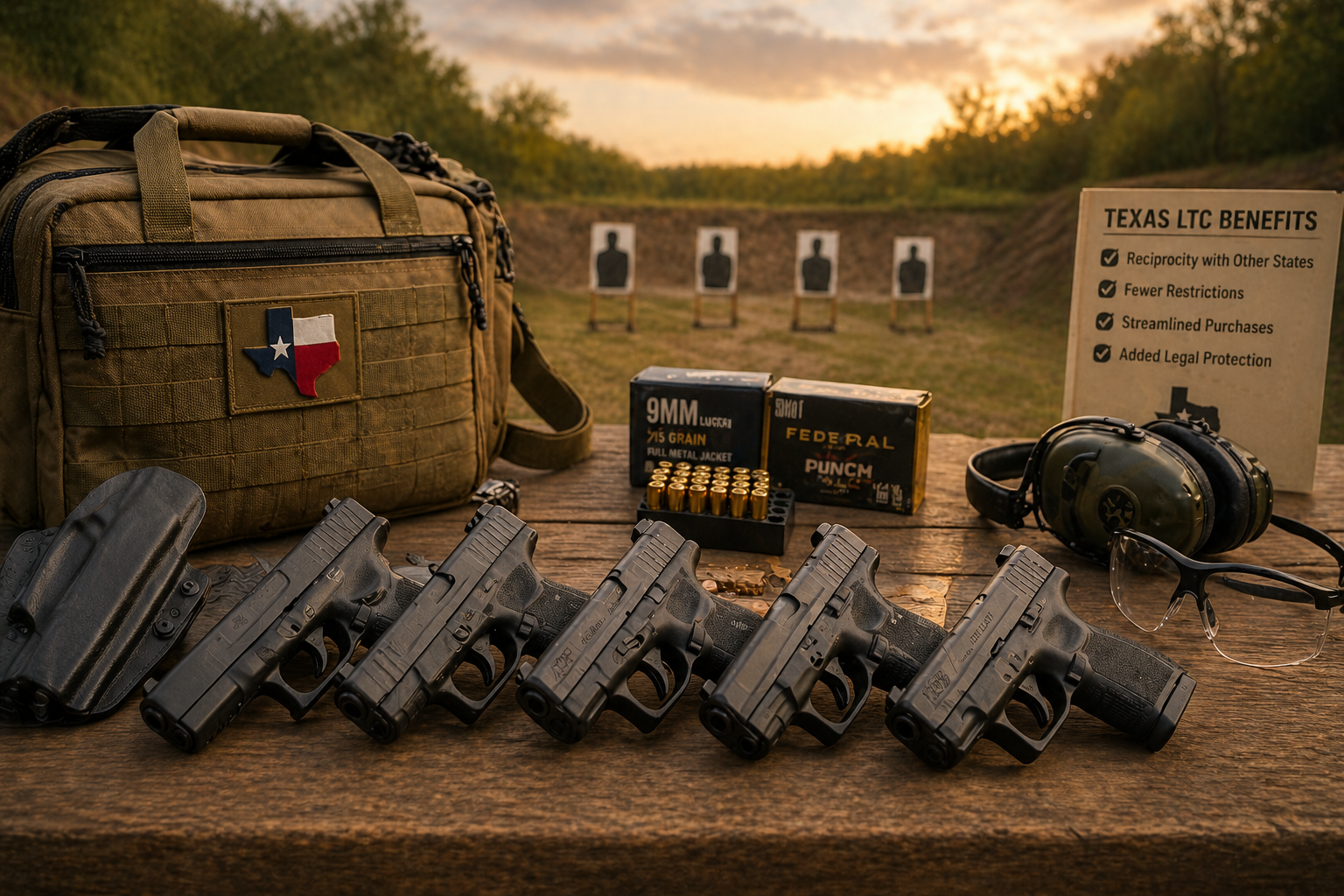
LTC Benefits:
- Recognized in multiple states (reciprocity)
- Fewer restrictions on where you can carry
- Streamlined firearm purchases
- Demonstrates training and legal knowledge
Where You Can and Cannot Carry
Even with an LTC, there are places where carrying a handgun is restricted.
Prohibited Locations:
- Schools and educational institutions
- Polling places during elections
- Courtrooms and government offices
- Bars that earn 51% of income from alcohol sales
- Secured areas of airports
These restrictions are often marked with signage referencing Texas Penal Code sections such as 30.05, 30.06, and 30.07.
Understanding 30.05, 30.06, and 30.07 Signs
Texas law uses specific signage to communicate whether firearms are allowed on private property.
30.05 Sign
- Applies to general trespassing
- Can prohibit entry with a firearm
30.06 Sign
- Prohibits concealed carry by LTC holders
30.07 Sign
- Prohibits open carry by LTC holders
If you see one of these signs properly displayed, you must comply or risk criminal charges.
Who Is Eligible for an LTC?
To qualify for a Texas LTC, you must:
- Be at least 21 years old (18 for military members)
- Have no felony convictions
- Not be chemically dependent
- Be capable of exercising sound judgment
Applicants must also complete a state-approved training course.
Why Training Still Matters
Even though training is no longer required for permitless carry, taking an LTC course is highly recommended.
You’ll learn:
- Texas gun laws and use-of-force rules
- Safe firearm handling
- Conflict avoidance strategies
This knowledge can make a critical difference in high-stress situations.
Traveling with an LTC
One of the biggest advantages of having an LTC is reciprocity. Texas has agreements with many other states, allowing you to carry legally while traveling.
However, laws vary by state, so always check local regulations before carrying across state lines.
Final Thoughts
Texas offers flexibility when it comes to carrying a handgun, but that freedom comes with responsibility. Understanding LTC laws helps ensure that you stay compliant and avoid unnecessary legal issues.
Even in a permitless carry state, having a Texas LTC provides valuable benefits, from expanded carry rights to increased legal protection.
Ready to Get Your Texas LTC?
If you’re looking for a simple, affordable way to get certified, an online LTC course is a great option. Learn at your own pace, from the comfort of your home, and gain the knowledge you need to carry confidently and responsibly.